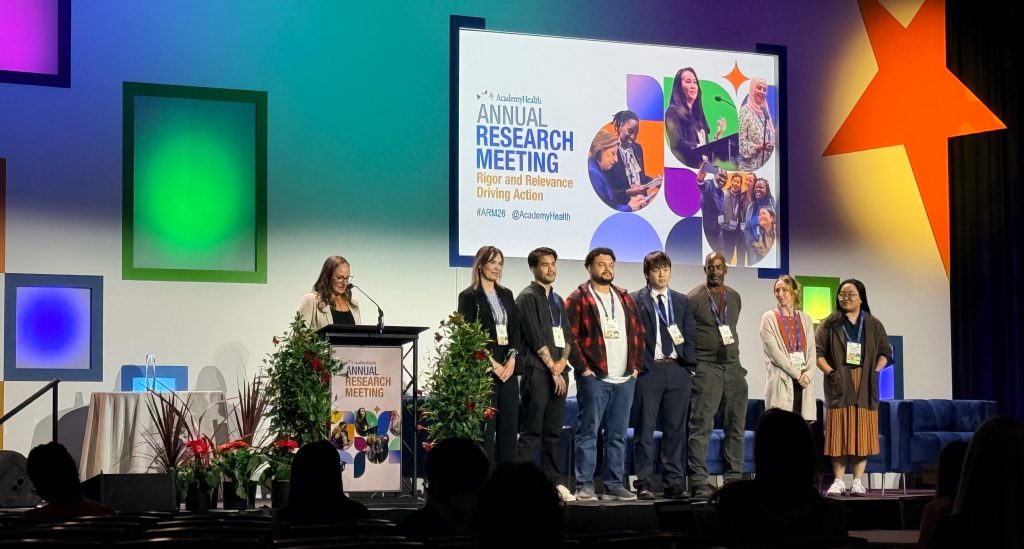
A community-driven research team at the University of Washington has received national recognition for its innovative and inclusive approach to public health research. Research with Expert Advisors on Drug Use (READU) has been awarded the prestigious Mosaic Award from Academy Health, honoring its commitment to fostering diversity, equity, and community within health services and policy research.
Founded in 2022, READU is an interdisciplinary team spanning the university’s schools of public health and nursing. What sets the group apart is its structure: the team includes researchers with lived and living experience of drug use, alongside academic staff and students. This model ensures that those most directly affected by substance use are not just participants in research, but leaders and decision-makers shaping it.
READU’s work focuses on advancing drug user health equity, improving overdose response within emergency medical services, and reducing stigma toward people who use drugs. Since its inception, the team has collaborated with partners including Public Health Seattle & King County, the Council with Expert Advisors on Drug Use, and VOCAL-WA, contributing to community-engaged research and policy evaluation efforts across the region.
According to READU leadership, the group operates on a shared-power model in which all members contribute their expertise—whether academic, professional, or experiential. “We train each other in what we know,” said team lead Jenna van Draanen. “That creates research that is more relevant, more grounded, and ultimately more impactful.”
A central philosophy guiding the team’s work is the harm reduction principle “Nothing about us without us.” This approach is reflected in how READU designs and conducts research. Projects are selected collaboratively and must align with the team’s values, with an emphasis on producing meaningful, non-extractive outcomes for participants and communities.
This structure also changes the research experience for participants. By engaging directly with researchers who share similar lived experiences, participants often report feeling more understood and less judged. The result is a more trusting and authentic research environment—one that strengthens both data quality and community impact.
Creating an authentic research environment
For many READU team members, the work is also deeply personal. Peer research coordinator Robert Pitcher said he was drawn to READU because it aligned with more than two decades of advocacy work within harm reduction spaces and a belief that people with lived experience have historically lacked representation in systems that directly affect them.
“I’ve been in the drug world, I guess, for 25 plus years now, and I’ve always felt that we didn’t have enough voice in these structures and systems,” Pitcher said. “This gave me a chance to advocate in a way that could be more productive and impactful.”
Adonica Warth, peer research coordinator, described the experience as transformative both professionally and personally. A veteran who said she had never previously felt empowered to speak publicly about issues connected to drug use, Warth said READU has helped her find both community and purpose.
“To be allowed to be that voice for people who haven’t traditionally had a voice is so rich,” Warth said. “The work we’re doing is so enriching. In all my years, I have never grown this far—not just professionally, but in my recovery and my family.”
Warth added that the team’s accomplishments demonstrate the strength and legitimacy of peer-led research. “The whole READU team together is providing work that could stand against any research team, peer or not,” she said. “We’re learning, but I think we’re doing impeccable work.”
READU research coordinator Cece Wettemann pointed to the group’s ability to create tangible change in real time. One example has been READU’s work related to overdose response within emergency medical services, including recommendations that contributed to multiple fire departments implementing leave-behind naloxone programs.
“Research generally takes a really long time to be placed into practice,” Wettemann said. “We’ve been able to significantly shorten that period of time by leveraging our connections within the community and with local agencies.”
Pitcher said READU’s strength comes from its diversity of backgrounds and relationships across public health, academia, social services, and community organizations.
“We’re able to make change much more quickly and effectively than typical teams could,” he said. “Everyone brings their own expertise, experience, and connections, and together that creates a much bigger impact.”
Recognition from Academy Health
The Mosaic Award recognizes organizations that create welcoming, inclusive environments and promote a sense of belonging across diverse backgrounds. For READU, the honor represents both validation and opportunity.
“It’s a profound moment for us,” van Draanen said. “We know internally that what we’re doing is meaningful, but to have that recognized externally shows that this kind of model has a place—and a future—in health services research.”
Looking ahead, the team plans to build on this recognition by expanding its work, including studying its ow n collaborative structure and sharing lessons with other researchers and institutions. READU is increasingly focused not only on improving services for people who use drugs, but also on demonstrating how community-led, peer-driven research models can reshape the field.
As health systems nationwide grapple with issues of equity, access, and trust, READU’s approach offers a compelling example of how inclusive research practices can lead to stronger outcomes—for both communities and the institutions that serve them.