
Expert qualitative research support—from study design to dissemination
The Qualitative Research Core (QRC) at the University of Washington Department of Health Systems and Population Health provides qualitative research expertise to investigators and research teams across UW and external organizations.
Rigorous qualitative research requires specialized expertise in study design, data collection, analysis, and reporting. The QRC helps research teams apply best practices, strengthen methodological rigor, and produce credible, impactful findings.
Whether you’re developing a proposal, collecting data, analyzing findings, or preparing a manuscript, we can provide expertise at any stage of your project.
How QRC can help
We provide support in three primary areas.
Qualitative Research Consultation & Project Support
QRC qualitative researchers can lead or support components of your project—from initial study design through analysis, reporting, and publication.
Study planning & grant development
- Qualitative methodology consultation
- Pre-award grant methodology support
- Data collection planning
- Interview and focus group guide development
- Qualitative data analysis plans
Data collection & analysis
- Interview and focus group support
- Thematic analysis
- Rapid qualitative analysis
- Codebook development
- Mixed-methods qualitative components
Reporting & dissemination
- Interpretation and synthesis of qualitative findings
- Reports and evaluations
- Manuscript development and writing support
- Guidance on qualitative reporting standards
Qualitative Research Training
Build your team’s qualitative research skills through practical, interactive training led by experienced qualitative researchers.
Training topics include:
- How to conduct a successful qualitative interview
- How to facilitate a focus group
- Thematic analysis
- Rapid qualitative analysis
- Dedoose software training
- Customized training for your research team or organization
Training can be tailored to your team’s experience level, research questions, project needs, and timeline.
What participants say:
“I liked the interactive component, which allowed attendees to put some of the new information into practice and work through and generate new questions.”
— Thematic Analysis Training participant
“The focus group breakout provided a live experience of what it entails and what potential challenges could be.”
— Data Collection Training participant
“The knowledgeable trainers.”
— Data Collection Training participant
Qualitative Research Resources
Access practical tools designed to support rigorous qualitative research.
Free resources
Codebook Template
A customizable template for organizing and documenting qualitative codes.
COREQ Checklist
A reporting checklist for interviews and focus group studies.
Additional tools and resources
- Sample qualitative analysis plans
- Codebook templates
- Case study forms
- Resources for qualitative manuscript preparation and reporting
When Should I Contact QRC?
You don’t need to wait until your study is underway. QRC can provide support at any point in the research lifecycle.
Consider contacting us when you are:
Developing a grant or protocol
→ Determine the appropriate qualitative methodology and strengthen your methods section.
Designing your study
→ Develop sampling strategies, data collection plans, interview guides, focus group guides, and analysis plans.
Preparing for data collection
→ Train interviewers or focus group facilitators and establish rigorous data collection procedures.
Analyzing qualitative data
→ Develop a codebook or conduct thematic, rapid, or other appropriate qualitative analyses.
Interpreting findings
→ Identify themes, synthesize results, and connect qualitative findings to your research questions.
Preparing reports or manuscripts
→ Strengthen reporting, interpretation, and presentation of qualitative findings.
Building your team’s skills
→ Arrange customized training in qualitative data collection, analysis, or software.
Select QRC Projects
Curious about our work? Explore previous projects where our qualitative insights have shaped strategies and driven meaningful results for our clients.
University of Washington Projects
Wildfire Smoke Intervention Stakeholder Perspectives
UW Department of Pediatrics
QRC provided rapid qualitative analysis and manuscript development support for a study examining caregiver and pediatric nurse perspectives on a wildfire smoke intervention for children with asthma.
Services: Rapid analysis · Interpretation · Manuscript support
Adopting a Lifespan Approach for ADHD Management
UW Medicine
QRC conducted thematic analysis and developed a report based on findings from 11 focus groups.
Services: Thematic analysis · Focus group data · Reporting
Mi Salud
Latino Center for Health, UW
QRC conducted rapid qualitative analysis and developed a project report.
Services: Rapid analysis · Reporting
BRIDGE Study
UW Diabetes Institute
QRC developed a customized training covering focus group guide development, focus group facilitation, hands-on practice, and an introduction to qualitative data analysis.
Services: Customized training · Focus groups · Qualitative analysis
Community Health Worker Psychosocial Interventions Study
UW Department of Psychiatry and Behavioral Sciences
QRC conducted thematic analysis and provided manuscript development support.
Services: Thematic analysis · Manuscript support
External Organizations
PRECISE Study
Society of Critical Care Medicine
QRC conducted analysis of qualitative data from a mixed-methods survey.
Services: Mixed-methods research · Qualitative analysis
Ketchikan Medical Center
ITHS WPRN Clinic Site
QRC provided customized training in qualitative data collection and analysis.
Services: Data collection training · Analysis training
Tacoma-Pierce County Health Department
QRC provided qualitative data collection training to support staff conducting research and evaluation activities.
Services: Data collection training
How to Work With QRC
Getting started is simple.
1. Tell us about your project
Complete our brief Collaboration Request Form with information about your research, project stage, and the type of assistance you’re seeking.
Complete the Collaboration Request Form
2. Meet with the QRC team
We’ll schedule a short consultation to learn more about your research questions, project needs, timeline, and available resources.
3. Receive a proposed scope
Following the consultation, QRC will provide proposed options outlining the:
- Scope of work
- Deliverables
- Timeline
- Budget
Submitting a request does not commit you to services. Costs and timelines depend on the scope and needs of each project.
Frequently Asked Questions
Can I contact QRC before my grant is funded?
Yes. We encourage investigators to contact QRC during proposal development. We can help develop qualitative methods, data collection and analysis plans, and appropriate scope and budget for qualitative research activities.
Do you work with investigators outside UW?
Yes. QRC works with both University of Washington researchers and external organizations.
Can QRC analyze qualitative data we’ve already collected?
Yes. Depending on your research questions, data, and project needs, QRC may be able to lead or support qualitative analysis of existing data.
Does QRC provide customized training?
Yes. Training can be customized for your team’s project, experience level, methods, and learning objectives.
How much do QRC services cost?
Costs vary depending on the type and scope of support required. Following an initial consultation, QRC will provide proposed scope, deliverables, timeline, and budget options.
How early should I contact QRC?
As early as possible. Early consultation allows QRC to provide the greatest input on study design, methods, staffing, timelines, and budgets, but we can also support projects already underway.
Meet the QRC Team
QRC Lead

Miriana Duran, MD, MPH
Research Scientist
Department of Health Systems and Population HealthExpertise: Qualitative study design • Rapid Analysis • Thematic Analysis •Community-engaged research • Native Spanish speaker
Full bio
Miriana Duran, MD, MPH, is a Research Scientist in the University of Washington’s Department of Health Systems and Population Health. Her research focuses on reducing health disparities among Latino and immigrant communities through community-engaged, culturally responsive research. Drawing on her background as a physician in Mexico and her training in public health, she examines how social, cultural, and structural factors influence health outcomes and access to care.
Dr. Duran has extensive experience leading qualitative research, with expertise in in-depth interviews, focus groups, qualitative data analysis, cultural adaptation of health interventions, and community-engaged research. Her work spans dementia caregiving, maternal and child health, health communication, cancer prevention and COVID-19 prevention and vaccination. She has partnered with community organizations, healthcare systems, and interdisciplinary research teams to develop and evaluate interventions that address the needs of underserved populations. Through the Qualitative Research Core, Dr. Duran provides consultation and training on qualitative study design, community engagement, data collection and analysis, and the application of qualitative findings to improve health programs and services. Her research seeks to advance health equity and inform policies and interventions that better serve Latino communities and other historically marginalized populations.
QRC Affiliates

Cynthia LeRouge, PhD
Affiliate Professor
Department of Health Systems and Population Health
Expertise: Human-Centered Design • Digital Health • Stakeholder Engagement • Implementation Science
Full bio
Cynthia LeRouge, PhD, is an Affiliate Professor in the University of Washington’s Department of Health Systems and Population Health and Department of Family Medicine with over 25 years of research experience. Her research focuses on the design, implementation, and evaluation of digital health technologies using qualitative and mixed-methods approaches grounded in human-centered design.
Dr. LeRouge partners with interdisciplinary research teams to understand the experiences of patients, clinicians, caregivers, and other stakeholders to inform the design and implementation of health innovations. Her methodological expertise includes qualitative interviews, Q-Sort, focus groups, participatory design, surveys, usability evaluation, and implementation research. Her work spans digital health, telehealth, consumer health technologies, patient engagement, and health information technology implementation. Through the Qualitative Research Core, Dr. LeRouge collaborates with investigators to strengthen study design, stakeholder engagement, qualitative data collection and analysis, and the translation of research findings into practical solutions that improve healthcare delivery and population health.

Sonia Bishop, BS
Research Scientist
Department of Health Systems and Population Health
Expertise: Community-Based Participatory Research • Community Engagement • Qualitative Methods • Health Equity
Full bio
Sonia Bishop, BS, is Deputy Director of Health Promotion Research Center (HPRC) at the University of Washington and a Research Scientist with more than 20 years of experience partnering with community-based organizations serving underserved populations. Her work focuses on community-engaged and community-based participatory research to advance health equity.

Brooke Ike, MPH
Research Scientist
Department of Family Medicine
Expertise: Mixed-Methods Research • Stakeholder Engagement • Implementation Research
Full bio
Brooke Ike, MPH, is a Research Scientist 4 in the University of Washington’s Department of Family Medicine with more than 20 years of experience conducting qualitative and mixed-methods research in real-world health settings. Her work integrates patient, clinician, staff, and community perspectives to examine complex health and healthcare experiences, interventions, and contexts, and to inform the co-design, adaptation, and implementation of health interventions. Through the Qualitative Research Core, Ms. Ike provides consultation on qualitative study design, patient and community engagement, data collection and analysis, and interpretation and use of qualitative findings to inform research and practice. Her research spans cancer prevention and survivorship, chronic pain, behavioral health, primary care transformation, and health equity.
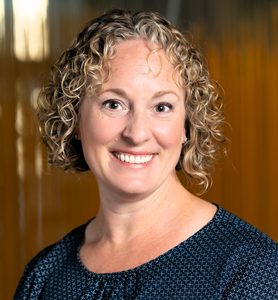
Marlana Kohn, MPH
Research Scientist
Department of Health Systems and Population Health
Expertise: Community-based dissemination research • Dissemination and implementation research • Workplace health promotion • Utilization of preventive health services
Full bio
Marlana Kohn, MPH, is a research scientist in the University of Washington’s Department of Health Systems and Population Health. She splits her time between the Health Promotion Research Center and the Center for Anti-Racism and Community Health. She has over 20 years’ experience across public health research and evaluation, and public and private payer healthcare.
Ms. Kohn’s expertise is in implementation and dissemination of evidence-based programs–particularly for older adults–and how to adapt those programs with diverse communities to best meet their health needs. She applies qualitative and mixed-methods approaches to maximize program impact as context and technology change. She also has an extensive evaluation portfolio supporting the entire evaluation life-cycle from design through dissemination of final products and community resources.
Ms. Kohn works closely with local, state, and national partners including municipal agencies, community-based organizations, foundations and healthcare to foster collaboration, build and maintain strong relationships, and improve community health. She focuses on moving research to community practice using community-centered and participatory approaches. She works to actively reduce health disparities by elevating community expertise, enhancing cultural relevance of programs in diverse communities, and supporting community leadership in research and evaluation.
Jean Taylor, PhD
Research Scientist
Department of Health Systems and Population Health
Expertise: Multi-method research • Human centered research • Decision support systems • Health information technology
Ready to discuss your project?
Whether you’re planning a new study, looking for qualitative analysis expertise, or building your team’s qualitative research skills, we’d be happy to learn more about your needs.
Questions?
Email us!
Qualitative Research Core
Department of Health Systems and Population Health
University of Washington