Policymakers, including Senator Manka Dhingra, visited students in HSERV 553 to discuss Washington’s new Permit-to-Purchase gun law.
In May of 2025, Washington became one of thirteen states, plus Washington D.C., to enact a permit-to-purchase law. House Bill 1163 requires individuals interested in purchasing a firearm to apply for a five-year permit through the Washington State Patrol. Effective May 1, 2027, applicants must pay a fee and provide evidence of completion of a certified firearms safety training program within the past five years to receive their permit. Research shows that firearm purchaser licensing laws, like this one, reduce gun violence and help prevent firearms from being diverted to other states or the illegal gun market.
Passing evidence-based gun legislation is rarely straight forward. Competing priorities, political disagreements, and well-funded opposition groups often stall progress. Yet Washington succeeded in passing its permit-to-purchase law. What made this policy possible? And what does it teach us about advancing policies that protect public health? HSERV 553 aims to teach exactly that.
Demystifying the legislative process
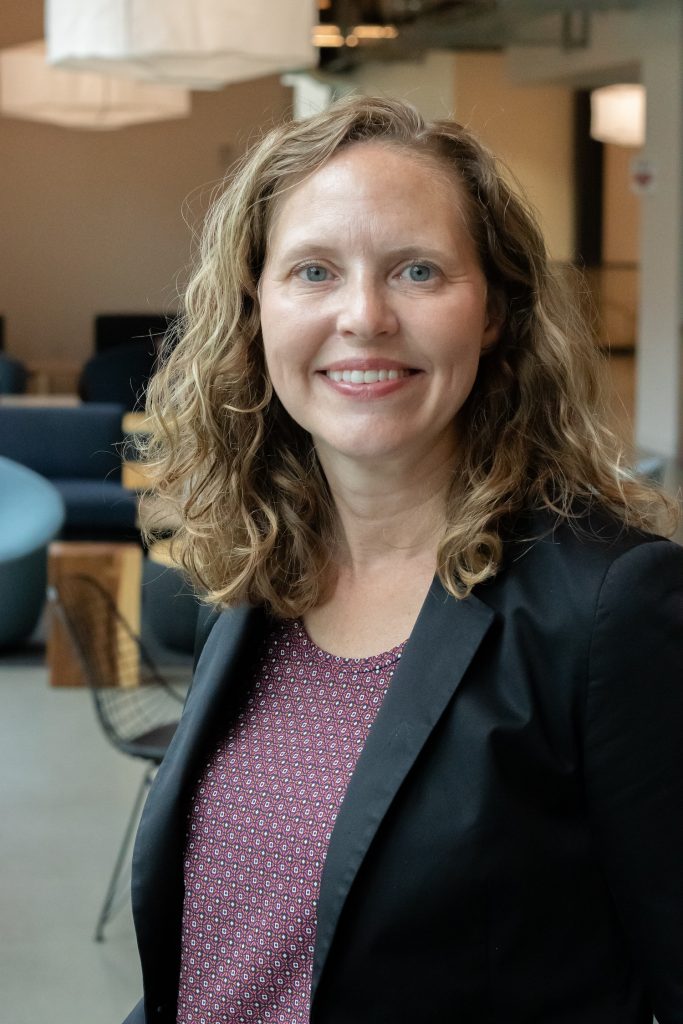
The Health Policy Development and Advocacy in the United States (HSERV 553) course helps students explore these questions in depth. The course, which is required for students in the Health Systems and Policy concentration within the MPH program, provides students with a complete understanding of how policies come to be. “We help students understand the full cycle of policy work. We learn how policies are developed, how they’re adopted, how they’re implemented, and how they’re evaluated,” said Molly Firth, course instructor, faculty lead for the concentration, and policy and advocacy consultant.
“More than anything we want students to understand that all public health is impacted by policy and that public health is in all policies.”
-Molly Firth, MPH | Course Instructor & HSP Faculty Lead
For the last five years, Firth has brought case studies on current legislation to the course, with Paul Fishman stepping in as this year’s co-instructor succeeding Jim Krieger. From the working family tax credit and climate commitment act to middle housing and the capital gains tax, the instructors have assembled panels of policy experts, advocates, legislators and lobbyists to show students how policy works in real time. “A lot of students, and people in general, hate the thought of politics and policy because it’s hard and it’s messy,” said Firth. “What we try to do is demystify the process by having all of these different perspectives talk about their work, why it’s important to them and how they work together.”
Breaking down the policy process in real time
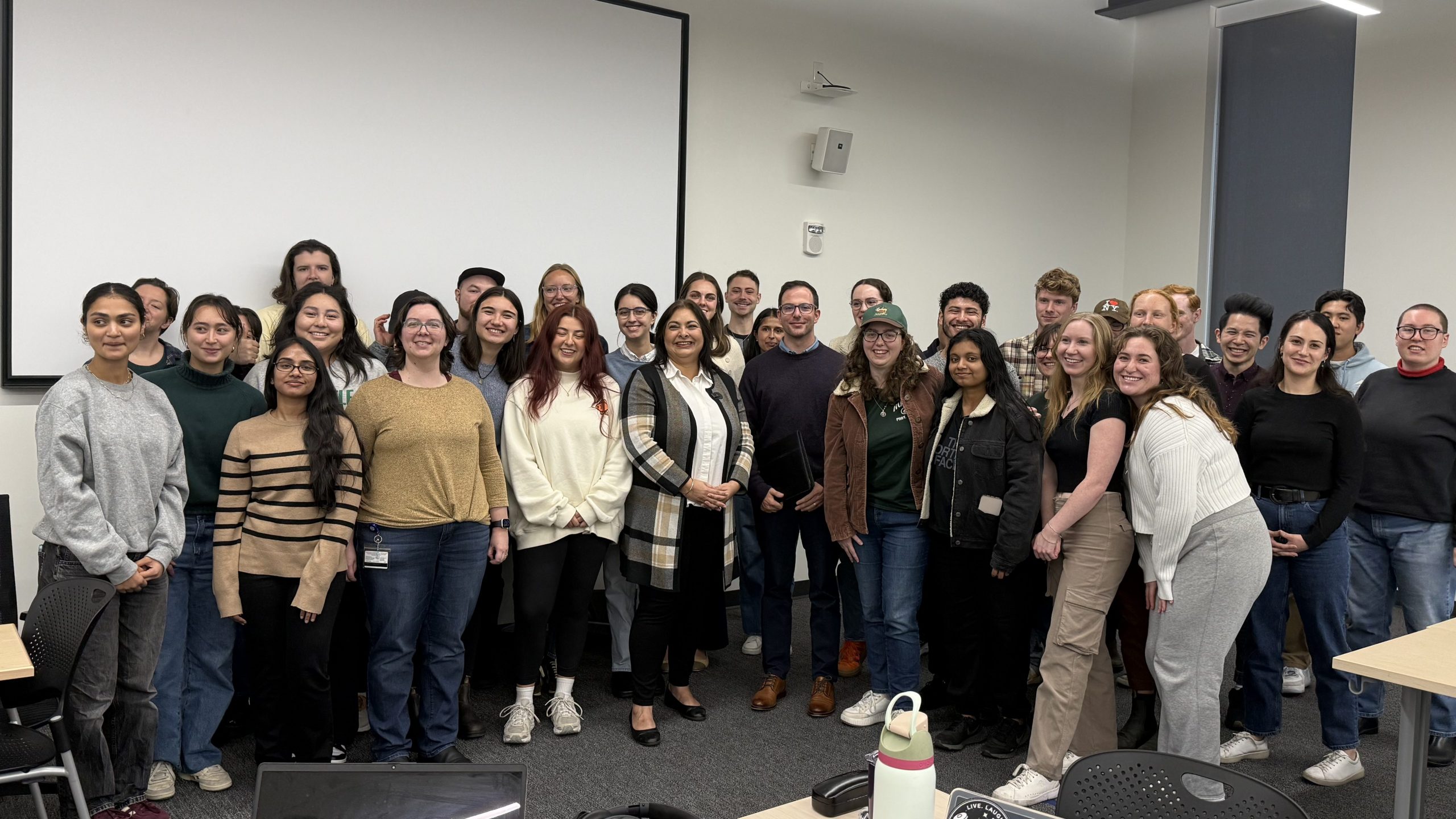
This year’s case study focused on Washington’s new permit-to-purchase legislation, bringing together a panel of leaders who helped make it a reality: Washington State Senator Manka Dhingra (D-45th District), Mike McIntyre from the Alliance for Gun Responsibility and Raven Buckingham Aäe, a commissioner on the Washington State Gender and Justice Commission. Senator Dhingra, who played a key role in passing the legislation, underscored the public health stakes. “Gun violence is a public health issue and has to be addressed using evidence-based solutions,” said Senator Dhingra. “Policies like Washington’s new permit-to-purchase law have been proven to save lives. It was an honor to join future public health leaders to discuss the work that went into passing HB 1163 and why it matters.”
“Gun violence is a public health issue and has to be addressed using evidence-based solutions.”
-Senator Manka Dhingra (D-45th District)
To help students understand the full arc of the policy process, the panel discussion was structured to encourage class participation. Instructors provided panelists with questions beforehand, and students asked questions anonymously in a shared document that were then shared with the panel during their discussion. “We talked about how the policy came about and how the community was engaged in policy development and adoption,” said Firth. “This bill passed with less controversy than others this year, so students wanted to talk about messaging that resonated with opposition and colleagues and how Senator Dhingra approached people’s concerns.”
The discussion also highlighted what happens after a bill is passed. Buckingham Aäe, a survivor of stalking and gun owner in a rural community, aims to close the gap between passing laws and implementing them, ensuring the safety benefits of policies are passed to the local level. “It was really impactful for students to hear Raven’s story and how she’s been able to insert herself into conversations and raise awareness for these issues,” said Firth. “It helps students see how lived experiences can be uplifted and shared with people in power to make a big difference.”
Preparing the next generation of policy leaders
Policy is complex, and no two issues move through the legislative process in the same way. While this year’s case study examined gun safety, the strategies and skills students gain in HSERV 553 can be applied to any public health issue. “Textbooks don’t prepare you for this type of work. It’s dynamic and has a lot of moving pieces,” said Firth. “These types of discussions break it down. You can have the best data, the best argument, the best evidence that a policy will work, but it still takes so much work and so many conversations and relationships to create and pass legislation. I hope students walk out of this class with a clearer foundation on policy work and the skills to help make it happen.”
For students interested in enrolling in the class or completing the HSP concentration click here or contact Molly Firth.