Second-year MHIHIM student Aaron Morris is already making a statewide impact. Now an EHR Senior Business Analyst with Washington’s Department of Social & Health Services, Aaron is helping lead the implementation of an enterprise electronic health record system—applying lessons from the classroom directly to one of the state’s most ambitious health IT initiatives.
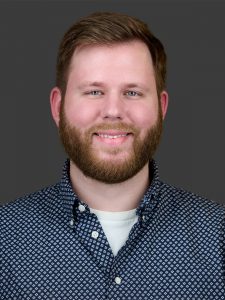
When Aaron Morris enrolled in the University of Washington’s Master of Health Informatics and Health Information Management (MHIHIM) program, he wasn’t just looking for a new credential—he was looking for a way to bring together his long-standing interests in health care, technology, and systems improvement. Today, as a second-year student in the program, Aaron has already taken a major step forward in that journey, landing a role as an EHR Senior Business Analyst with Washington State’s Department of Social & Health Services (DSHS).
Aaron’s new position places him at the center of one of the most ambitious health IT initiatives underway in Washington state: the implementation of a single, enterprise-level electronic health record (EHR) system across multiple state agencies. The effort represents a key milestone in a statewide collaboration to modernize and unify health system networks across DSHS, the Department of Corrections, the Health Care Authority, and other partner organizations.
From frontline programs to health IT strategy
Before entering the MHIHIM program, Aaron worked within DSHS’s Developmental Disabilities Administration (DDA) as a program consultant. In that role, he trained and mentored case resource managers on the use of the state’s Support Assessment—a tool that determines eligibility and levels of support for children and adults with developmental disabilities. He also supported CARE, an electronic records application, troubleshooting issues, reviewing business requirements, and helping distinguish between user challenges, system design limitations, and true technical failures.
“That role gave me exposure to how systems actually function—or don’t—in real-world settings,” Aaron said. “I was constantly thinking about how technology, policy, and human workflows intersect.”
Although Aaron’s undergraduate degree was in kinesiology, with an original plan to pursue occupational therapy, his career path began to shift after multiple colleagues independently introduced him to the concept of informatics. That spark led him to health informatics—a field that allowed him to remain connected to health care while leaning into his natural curiosity about technology, data, and systems.
Why UW and the MHIHIM program
When choosing a graduate program, Aaron was drawn to the University of Washington not only for its reputation, but for its deep connections to the regional health care and public sector ecosystem.
“UW offered something that fully online programs couldn’t,” he explained. “Faculty, guest speakers, and classmates who are actively working in the same systems I wanted to be part of—right here in Washington.”
That local focus paid off quickly. Through guest lectures and coursework, Aaron began building relationships with leaders involved in large-scale EHR implementations across the state. One of those conversations ultimately introduced him to the statewide EHR initiative he now helps support—a reminder of the value of networking early, even before positions formally exist.
“The program created space to have meaningful conversations,” Aaron said. “I wasn’t asking for a job. I was learning, listening, and sharing what I was studying. Over time, that turned into real opportunities.”
Balancing full-time work, life, and graduate school
Aaron has managed his time in the MHIHIM program while working full time—a challenge he describes as demanding, but manageable with strong time management and faculty support.
“It’s a lot,” he said. “But the assignments are designed to be meaningful. The more time you put in, the more you walk away with.”
He credits the program’s HyFlex format for making it possible to balance coursework with family life in Bellingham, as well as faculty members who recognize that students are professionals with responsibilities beyond the classroom.
“That understanding makes a huge difference,” Aaron said. “It allows you to stay engaged rather than overwhelmed.”
Applying coursework directly to a senior-level role
In his new role as an EHR Senior Business Analyst, Aaron works within the unit responsible for preparing Washington state agencies for EHR implementation. His days include agile stand-ups, requirements elicitation, workflow analysis, documentation, and cross-agency collaboration—all areas where he says MHIHIM coursework directly prepared him.
“Project Management alone was worth its weight in gold,” Aaron said. “We learned agile methodologies, sprint planning, writing stories, retrospectives—all of it. I walked into a team that was transitioning to agile and felt ready from day one.”
Other courses provided foundational knowledge in imaging systems, data standards, leadership, and communication—skills that allow Aaron to contribute confidently in conversations with clinicians, IT teams, vendors, and executive leadership.
“I wouldn’t be able to step into this role without this program,” he said. “The learning gap would have been too large.”
Building a foundation for statewide impact
At the heart of Aaron’s work is preparation—ensuring that requirements are clearly documented, workflows are well understood, and lessons from past implementation attempts are incorporated into current planning. The goal is not just a successful go-live, but a system that improves interoperability, supports providers, enhances patient safety, and makes better use of public resources.
“When this is done well, it benefits everyone,” Aaron said. “Providers, patients, agencies—and ultimately, Washingtonians.”
As he completes his final year in the MHIHIM program, Aaron continues to bridge academic learning with real-world impact, embodying the program’s mission to prepare informatics professionals who can lead complex health systems into the future.
“This program helped me find where I fit,” he said. “It brought together everything I care about—and it’s only the beginning.”