When a teaching award recognizes graduate student instructors, the nominations almost always tell you something the CV can’t. In Angela Chen’s case, they tell a consistent story: a teaching assistant who treats students as whole people, not just names on a roster.
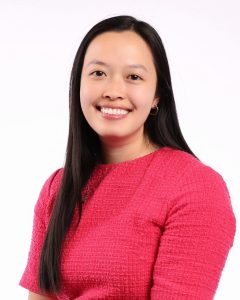
Chen, a Health Services PhD candidate in the Department of Health Systems and Population Health with an emphasis in Implementation Science, has been named the 2026 School of Public Health Outstanding Teaching Assistant, recognizing exceptional teaching effectiveness and student mentorship. The nomination came from students themselves; something Chen says made the honor especially meaningful.
“I felt humbled and moved,” she said. “Knowing they felt supported enough to take the time to nominate me means so much.”
Teaching the Whole Student
Chen has served as a TA across both epidemiology and health services graduate coursework. Students describe her as a steady, dependable presence in courses that can otherwise feel intimidating. Asked what sets her approach apart, Chen points to a simple philosophy: see students as whole people navigating competing responsibilities and major life transitions, not just students in a course.
“I’m committed to supporting them academically and as human beings,” she said. “Practically, that might look like holding extra review sessions or staying after class to answer questions. I try to respond to every question with patience, create a space that feels safe, and let them know that I really care.”
That philosophy shows up in her teaching style, rooted in active learning — students build understanding through practice, dialogue, and reflection rather than by passively receiving information.
“I focus on creating space for students to work through challenging concepts themselves, with me as a guide,” she said. “I adapt my pacing and examples to meet students where they are. I also see teaching as relational and iterative: I ask for feedback, reflect on what’s working, and adjust. I’m continually learning alongside my students.”
What Students Are Saying
The nomination letters and course evaluations paint a picture of a TA who consistently went beyond what the role required. One student, who has completed four degrees at different universities, wrote that TAs like Chen are rare, recalling a moment that stuck with them: even while traveling internationally for an academic conference, Chen made sure to update her availability so students would still know how to reach her.
“Among students, she developed a reputation as someone you could truly count on,” the student wrote. “If Angela was the TA, you knew you were going to be supported, no matter what.”
Other students echoed the theme of accessibility and warmth. Several mentioned that Chen routinely stayed after class to work through material one-on-one, and that she made even challenging quantitative methods feel approachable. As one student put it, Chen “contributed the most to my learning” and “went above and beyond” — sentiments repeated across multiple nomination endorsements.
From TA to Instructor
Chen’s time as a TA has also shaped her own path toward independent teaching. She has since served as instructor of record for several undergraduate courses, including Introduction to Health Systems and Principles of Epidemiology — both taught as part of a summer study abroad program in Spain that she co-directed for pre-med students — as well as Principles of Epidemiology at the University of Alaska Fairbanks.
“My experience as a TA was an important foundation that prepared me to teach my own classes independently,” she said. “When I later stepped into the role of instructor, designing my own curriculum, lectures, and assessments, I wasn’t starting from scratch, because my time as a TA had prepared me well.”
She describes the role as one that has changed her as much as it has changed her students. “Being a TA has made me a better communicator, a better listener, and a better learner,” Chen said. “There is no better way to master something than to teach it.” She adds that watching students grow in confidence over the course of a quarter — and hearing from former students who stop to say hello — has been one of the most rewarding parts of the experience.
A Winding Path to Public Health
Chen’s teaching instincts didn’t start in a UW classroom. Before entering the PhD program in 2022, she spent three years as a primary school teacher for the Spanish Ministry of Education in a rural town in Spain — an experience that later informed the Spanish-language study abroad course she went on to co-direct for UW pre-med students.
Her path to the PhD wound through global health policy and data work as well. Chen worked as a Program Analyst in the Office of HIV/AIDS in the Global Health Bureau at the U.S. Agency for International Development, where she focused on scaling up multi-month dispensing of antiretrovirals for HIV treatment and prevention during the COVID-19 pandemic, as well as expanding machine learning applications for HIV care. Earlier still, she worked as a Data Analyst in the Peace Corps’ Office of Strategic Information, Research, and Planning in Washington, D.C.
Chen holds a Master of Science in Public Health with a concentration in Health Economics from the London School of Hygiene and Tropical Medicine, and a double bachelor’s degree in International Affairs (Global Public Health concentration) and Spanish Literature from George Washington University. From 2022 to 2025, she was a trainee on the Agency for Healthcare Research and Quality (AHRQ) National Research Service Award (NRSA) T32 training grant, and she also worked as a Research Assistant at the Institute for Health Metrics and Evaluation (IHME), contributing to the Global Burden of Disease study on the Reproductive, Genitourinary, and Digestive Disease and Neonatal and Child Health teams. From 2025 to 2026, she was a trainee on the National Institutes of Health (NIH) funded Institute of Translational Health Sciences (ITHS) TL1 Translational Research Training Program.
Her research interests reflect that winding path: health equity, women’s health, Asian-American populations, quasi-experimental methods for causal inference from observational data, and health economics for policy and decision-making.
Originally from St. Louis, Missouri, Chen lived abroad in four different countries in the six years before moving to Seattle to begin her PhD. An avid globetrotter, she has traveled to more than 50 countries and speaks English, Chinese, and Spanish.
A Well-Earned Recognition
The Outstanding Teaching Assistant Award recognizes only one graduate student across the School of Public Health each year; Chen is the first from the Department of Health Systems and Population Health to have received it since 2012. For a school built on training the next generation of public health researchers and practitioners, Chen’s recognition is a reminder that great science depends on great teaching — and that the students closest to the classroom are often the ones best positioned to notice it.