When the Washington State Legislature is in session, the pace inside the Capitol in Olympia can be relentless. Lawmakers and staff navigate hundreds of emails, meetings with stakeholders, committee hearings, and fast-moving policy debates—often all at once.
For Kalia Hobbs Rutz, that environment is exactly where she wants to be.
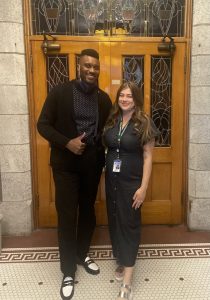
Hobbs Rutz serves as a legislative assistant to Representative Shaun Scott, who represents Washington’s 43rd Legislative District in the State House of Representatives. In that role, she helps manage communications, coordinate policy work, and ensures that the office stays connected with the community it serves.
“Our legislative assistants are asked to do quite a lot in the state House of Representatives,” Scott said. “At the height of session, you’re getting hundreds—maybe thousands—of emails every couple of days. Kalia’s ability to synthesize that information and help communicate our policy priorities to stakeholders and constituents has been indispensable.”
Grounded in Public Health and Community
For Hobbs Rutz, the work sits at the intersection of two interests that have shaped her academic and professional path: public health and public policy.
“Public health touches so many aspects of our lives,” she said. “Of course there’s epidemiology, but there are also so many components that are really community-based—housing, health care, higher education, workforce development. All of those issues show up in policy conversations, and they’re also public health issues.”
Hobbs Rutz grew up in Seattle’s 43rd Legislative District—the same district she now serves through her work in the legislature. The connection to her community is something she values deeply.
“I’m Representative Shaun Scott’s legislative assistant for the 43rd District, which is where the University of Washington is located,” she said. “It’s also where I grew up and spent my entire educational journey.”
Her academic path eventually led her to the University of Washington’s Master of Public Health program in Community-Oriented Public Health Practice. What stood out to her about the program was its focus on real-world collaboration and community engagement.
“When I was searching for public health programs, the community-oriented element really stood out to me,” Hobbs Rutz said. “The opportunity to work on real community projects and engage with real stakeholders was a really powerful draw.”
“When you’re developing policy, you have to think about how it’s communicated, and when you’re communicating about policy, you have to think about what it really means for communities.”
-Kalia Hobbs Rutz (COPHP MPH ’24)
That experience helped prepare her for the dynamic environment of policymaking. The program’s problem-based learning approach—where students work through complex real-world challenges in collaborative teams—mirrors many of the skills needed in government.
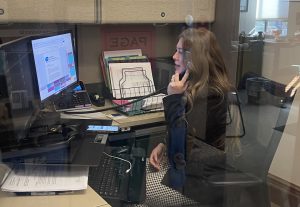
“You’re given a set of challenges, and you have to figure out how to strategize your way through them,” she said. “Learning how to be resourceful and think through complicated problems makes a big difference in an environment like the legislature.”
Representative Scott says that preparation is evident in Hobbs Rutz’s day-to-day work.
“She’s involved in all of our policy conversations—the political conversations about which members we might want to appeal to around certain bills,” he said. “There’s so much information that you’re bombarded with on a daily basis. Her ability to synthesize that back to me and to stakeholders who come through our office to talk about priority bills has been incredibly valuable.”
Where Public Health and Policymaking Meet
Scott also sees Hobbs Rutz’s public health background as particularly relevant at a time when health-related issues have become central to policymaking.
“I feel like we’ve talked about public health more in the last five years than maybe we did in the previous fifty,” he said. “Being able to navigate that is a real concern that’s front of mind for many people.”
For Hobbs Rutz, working in the legislature has reinforced how closely public health and policy are connected.
“When I started my Master of Public Health, I didn’t know exactly where I wanted to end up,” she said. “I really saw it as the world is your oyster and there are so many opportunities you can pursue.”
Over time, she realized that policymaking offered a unique opportunity to address many of the systems that influence health and wellbeing.
“Public health touches every element of our society, and public policy does too,” she said. “Being here feels like the perfect joining together of those interests—community work, policy development, and thinking about how decisions affect people across the state.”
In her role, Hobbs Rutz helps support communication strategies, stakeholder engagement, and the policy development process—work that requires both technical knowledge and an understanding of the communities affected by legislation.
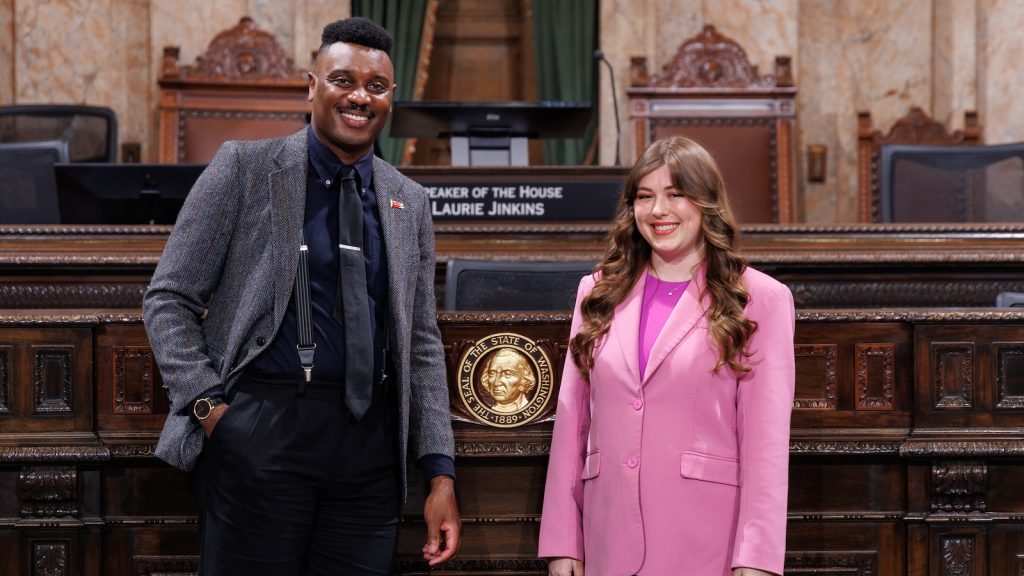
“When you’re developing policy, you have to think about how it’s communicated,” she said. “And when you’re communicating about policy, you have to think about what it really means for communities.”
For Scott, that perspective is exactly what makes Hobbs Rutz such a valuable member of the office.
“Public health is about attentiveness and accessibility,” he said. “Those are two really important qualities to have in the state House of Representatives.”
As Hobbs Rutz continues to grow in her role, she’s excited to remain part of the policymaking process and the broader effort to connect government decisions with the needs of communities.
“Being here really feels like the joining together of the things I care about—policy, community work, and thinking about how those decisions affect people across the state,” she said.